
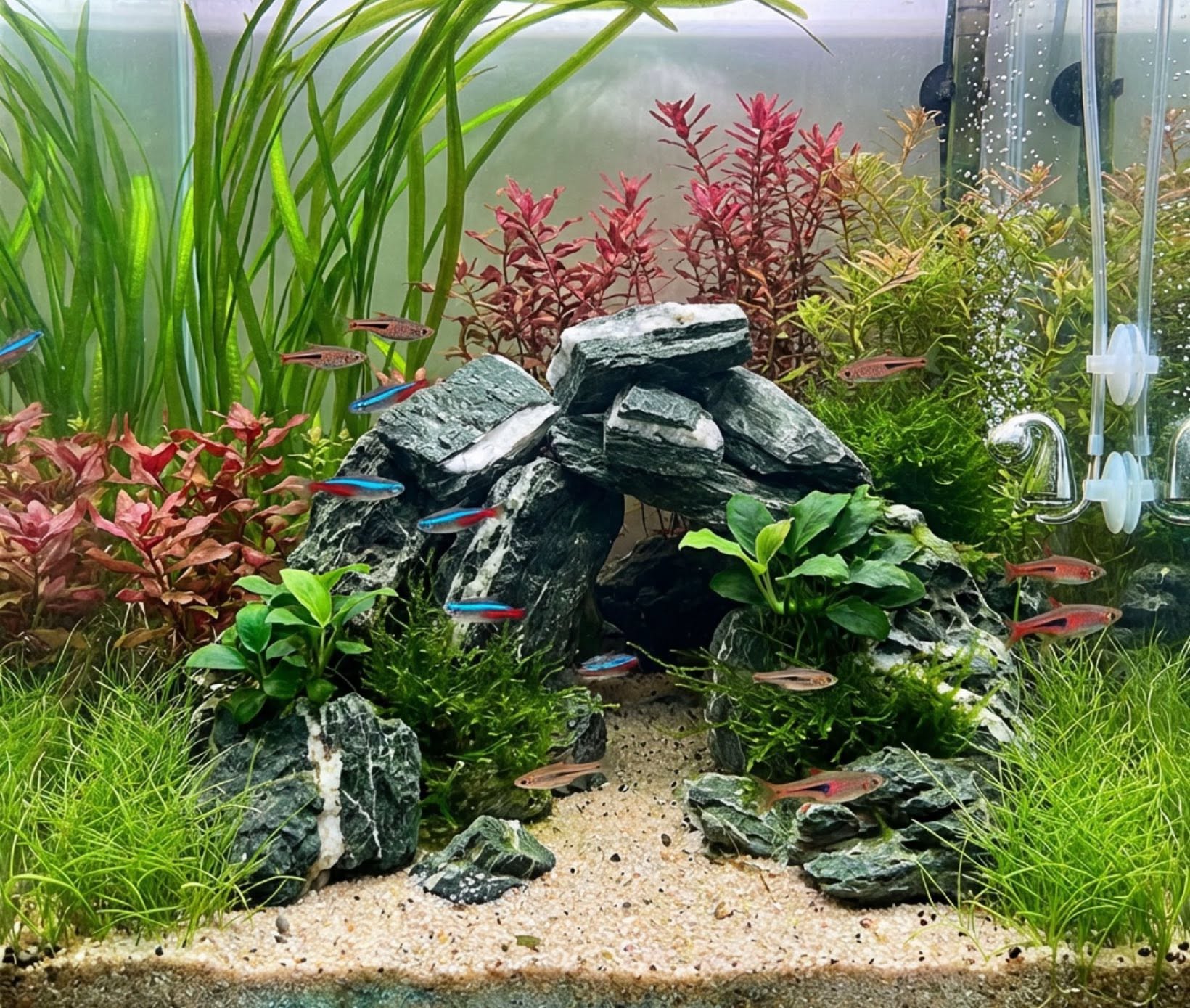
Aquascaping is the art of arranging aquatic plants, rocks, driftwood, and substrate to create a living underwater landscape. Whether you're inspired by the lush Nature Aquarium style of Takashi Amano or the dramatic rocky Iwagumi layout, aquascaping transforms a fish tank into a genuine work of art — and it's more achievable for beginners than you might think.
In this guide, we'll walk you through everything you need to get started: choosing the right equipment, selecting your first plants, and avoiding the most common beginner mistakes.
What Is Aquascaping?
Aquascaping combines horticulture, interior design, and fishkeeping into one rewarding hobby. Unlike a standard community tank, an aquascape is designed with deliberate composition — foreground, midground, and background planting zones, hardscape elements like wood and stone, and carefully managed water chemistry to keep plants thriving.
The most popular styles include:
- Nature Aquarium — lush, natural-looking layouts inspired by terrestrial landscapes
- Iwagumi — minimalist stone arrangements with carpet plants
- Dutch Style — dense, colourful plant rows with strict compositional rules
- Jungle Style — wild, overgrown, low-maintenance layouts perfect for beginners
What You'll Need to Get Started
1. The Tank
A wider, shallower tank gives you more surface area to work with and better light penetration. A 60cm or 90cm tank is ideal for beginners — large enough to create impact, small enough to manage water parameters easily.
Browse our
2. Substrate
Substrate is the foundation of your aquascape — literally. Aquatic plant substrates are nutrient-rich and slightly acidic, which promotes healthy root development. Avoid standard gravel for planted tanks; it won't support plant growth long-term.
Popular choices include active soils like ADA Aqua Soil and Tropica Aquarium Soil. Shop our full range of 
3. Lighting
Plants need light to photosynthesise, and the intensity and spectrum of your light will determine which plants you can keep. For beginners, a quality LED unit with a timer is ideal — aim for 6–8 hours of light per day to start.
Explore our
4. CO₂ Injection
CO₂ is the single biggest factor in plant growth after light. While some plants (Java Fern, Anubias, mosses) grow well without added CO₂, most high-impact aquascapes rely on pressurised CO₂ systems to achieve lush, fast growth.
If you're new to CO₂, start with a simple diffuser and regulator setup. Browse our

5. Fertilisers
Even with a nutrient-rich substrate, your plants will benefit from regular liquid fertilisation — particularly for micronutrients. Dose consistently and adjust based on plant response (yellowing leaves = nutrient deficiency; algae = too much light or nutrients).
Shop
6. Hardscape: Wood & Stone
Driftwood and rocks give your aquascape structure and visual depth. They also provide surfaces for mosses and epiphyte plants like Anubias and Bucephalandra to attach to. Choose pieces with interesting shapes and arrange them following the rule of thirds for a natural look.
Browse our
7. Plants
Start with easy, forgiving species before moving to demanding carpeting plants. A good beginner plant list:
- Foreground: Dwarf Hairgrass, Monte Carlo, Java Moss
- Midground: Cryptocoryne wendtii, Anubias Nana, Bucephalandra
- Background: Vallisneria, Hygrophila, Amazon Sword